Whether as a road bike vest for fast descents or as a cycling vest for cool morning rides: a Ryzon vest reliably protects your upper body without restricting freedom of movement. Windproof materials block cold riding wind, and thanks to its compact size, the vest simply disappears into your jersey pocket as temperatures rise.

Light & windproof road bike vests
Shop the look
No products found
Use fewer filters or remove all
All prices are in USD and include VAT.
Road Bike Vest and Cycling Vest: What You Should Look Out For
Cycling vests are the clever layering solution for changeable conditions: they protect the chest and back from wind, rain and cold, while leaving the arms free for maximum freedom of movement and breathability.
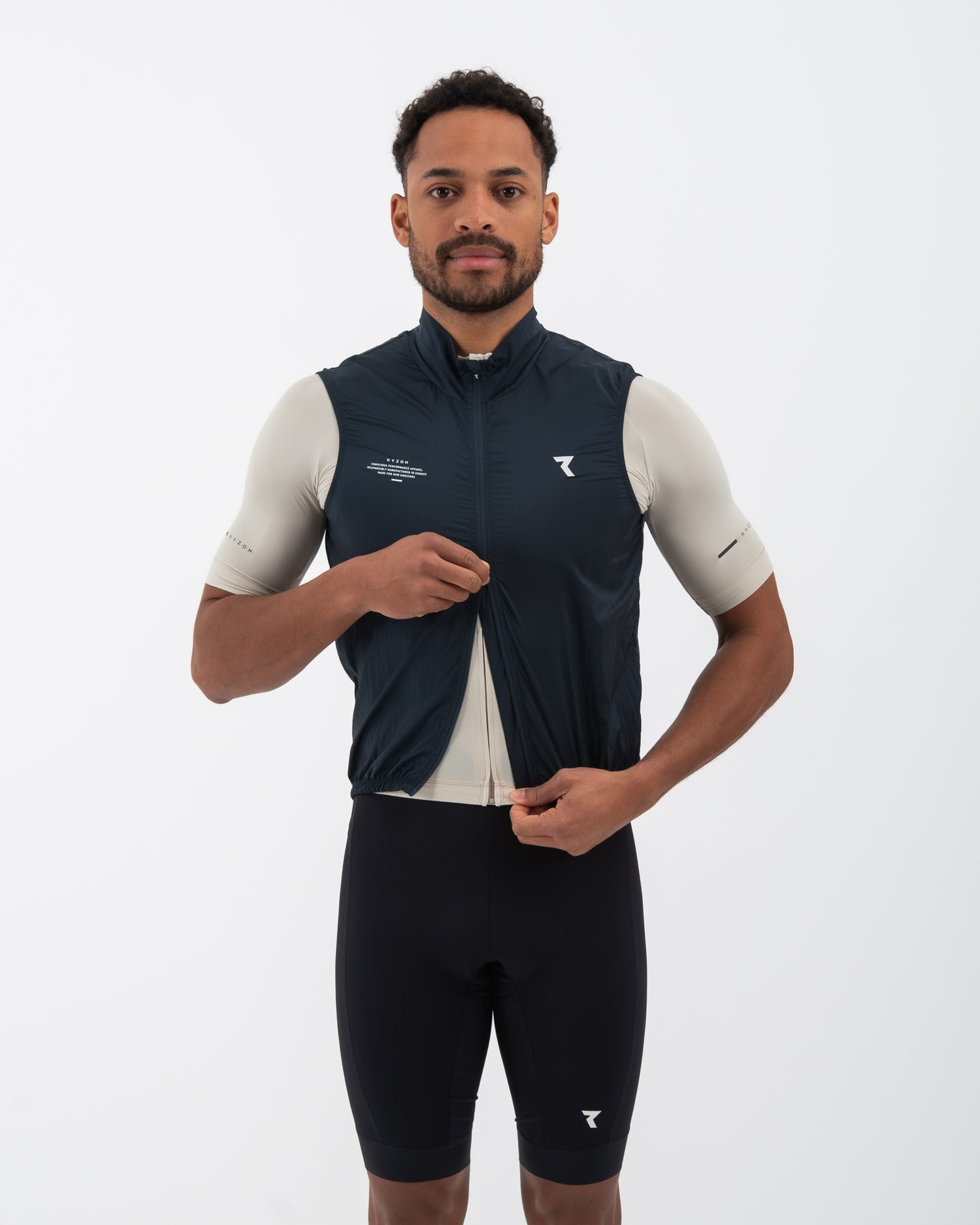
Innovative materials: We use innovative materials that are lightweight, breathable, windproof and water-repellent . This means you stay dry and comfortable even in changeable weather conditions.
Perfect fit: Our vests are cut close to the body and have the typical cycling-specific shape, which is shorter at the front and longer at the back. They therefore offer optimal aerodynamics without constricting or creasing.
Functional details: Our cycling vests feature functional details such as reflectors and mesh panels for ventilation , which provide additional safety and comfort.
Small pack size: Our cycling vests can be folded so small that you can easily store them in your jersey pocket when you are warm enough.
Combinability: Ryzon vests can be perfectly combined with our short-sleeved or long-sleeved jerseys . This makes them particularly suitable for the transitional seasons.
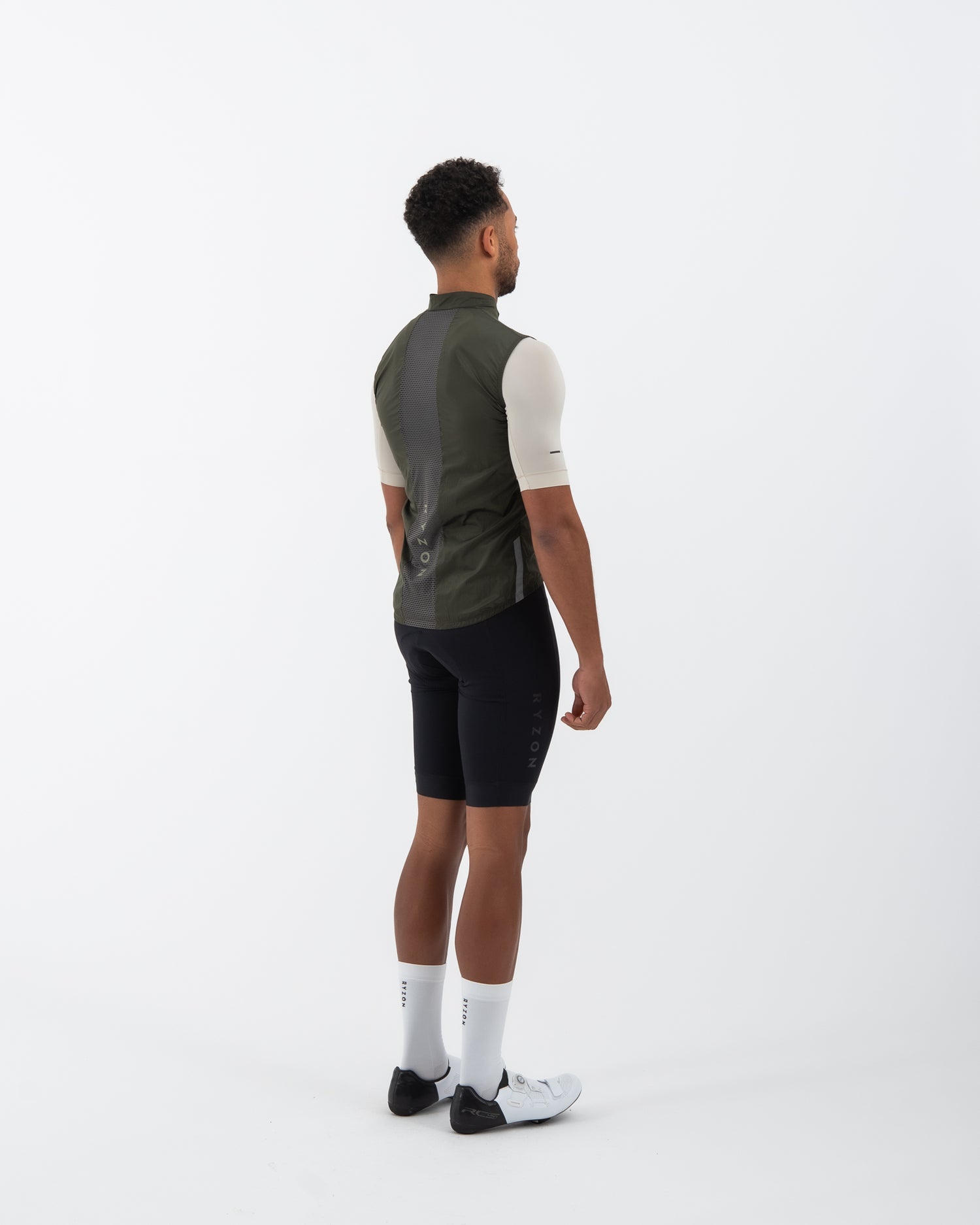
Men's Cycling Vest
Our men's cycling vest has a close-fitting cut and is designed for an upright riding position. It fits snugly around the shoulders and upper body without constricting and pairs perfectly with short- or long-sleeved jerseys.
Women's Cycling Vest
Our women's cycling vest is based on a custom women's cut that fits smoothly over the chest and waist without bunching. This keeps the vest aerodynamic even at high speeds and provides reliable protection from the wind.
Wind Vest
The wind vest is ultralight, reliably blocks the wind, and folds down to fit into any jersey pocket. It is the ideal companion for long descents, cool mornings, and rides in changeable weather when a jacket would be too warm.
Thermal Vest
The thermal vest features an insulating inner layer and keeps you warm in cold temperatures without the need for a full jacket. Paired with a long-sleeved jersey and base layer, it is ideal for spring and autumn. If it stays cold for longer periods, a winter jacket is the better choice.
Gravel Vest
When gravel riding, speed, terrain, and weather often change within a few hours. A lightweight, durable vest protects against chilling during long descents and breaks and can be quickly stowed away when it warms up on the next climb. For prolonged rain, a rain jacket complements your gravel setup, while a road cycling jacket is ideal for cool conditions all day long.
FAQs Bicycle Vests
-
A cycling vest is a sleeveless garment for cycling that protects the chest and back from wind, rain, and cold, while leaving the arms free for full freedom of movement and breathability. It is the ideal layering solution in changeable conditions, on cool mornings or fast descents, and thanks to its compact size, it usually fits easily into the jersey pocket.
-
A cycling jacket has long sleeves and protects the entire upper body, including the arms, making it ideal for persistently cool or wet conditions. A cycling vest leaves the arms free and is significantly lighter, more breathable, and more compact to store. During intense exertion or in changeable weather, the vest is usually the more efficient choice because it helps prevent overheating.
-
A wind vest is ultralight, blocks the wind, and can be folded down to the size of a fist, making it perfect for long descents and cool mornings. A thermal vest has an insulating inner layer and keeps you warm in cold temperatures without the need for a full jacket.
-
As a rule of thumb, an uninsulated wind vest is worth it from around 12–18 °C or in changeable weather, while a thermal vest is suitable at around 5–12 °C. Regardless of the temperature, the vest is also useful when long descents are ahead or rain is possible, as it prevents you from cooling down after sweating on the climb.
-
A cycling vest should fit snugly against the body without pressing or restricting breathing. This prevents flapping in the wind, eliminates cold spots, and maintains optimal aerodynamics. It may feel slightly tight when standing, but fits perfectly in the typical riding position.
-
Most cycling vests are water-repellent (DWR treatment) and provide reliable protection against light showers, splashes, and damp weather. For prolonged rain, a rain jacket is recommended; for changeable conditions, a water-repellent wind or transitional vest is sufficient.
-
Traditionally, a cycling jersey is worn under the cycling vest to wick sweat away from the body. On cooler days, a long-sleeved base layer completes the layering and provides extra warmth. It is important that all materials are breathable to ensure that moisture can effectively escape.
-
Bike vests should be washed inside out on a gentle cycle at 30°C, without fabric softener or bleach, and not tumble-dried. Fabric softener damages the water-repellent DWR coating and reduces breathability. If the water repellency wears off, it can be reactivated with a technical wash-in treatment or waterproofing spray.